A Letter to My Students: On Creativity, AI, and the Future You're Building
Dear Art 103A Students,
Welcome. Before we begin this semester together, I want to tell you where this letter actually started.
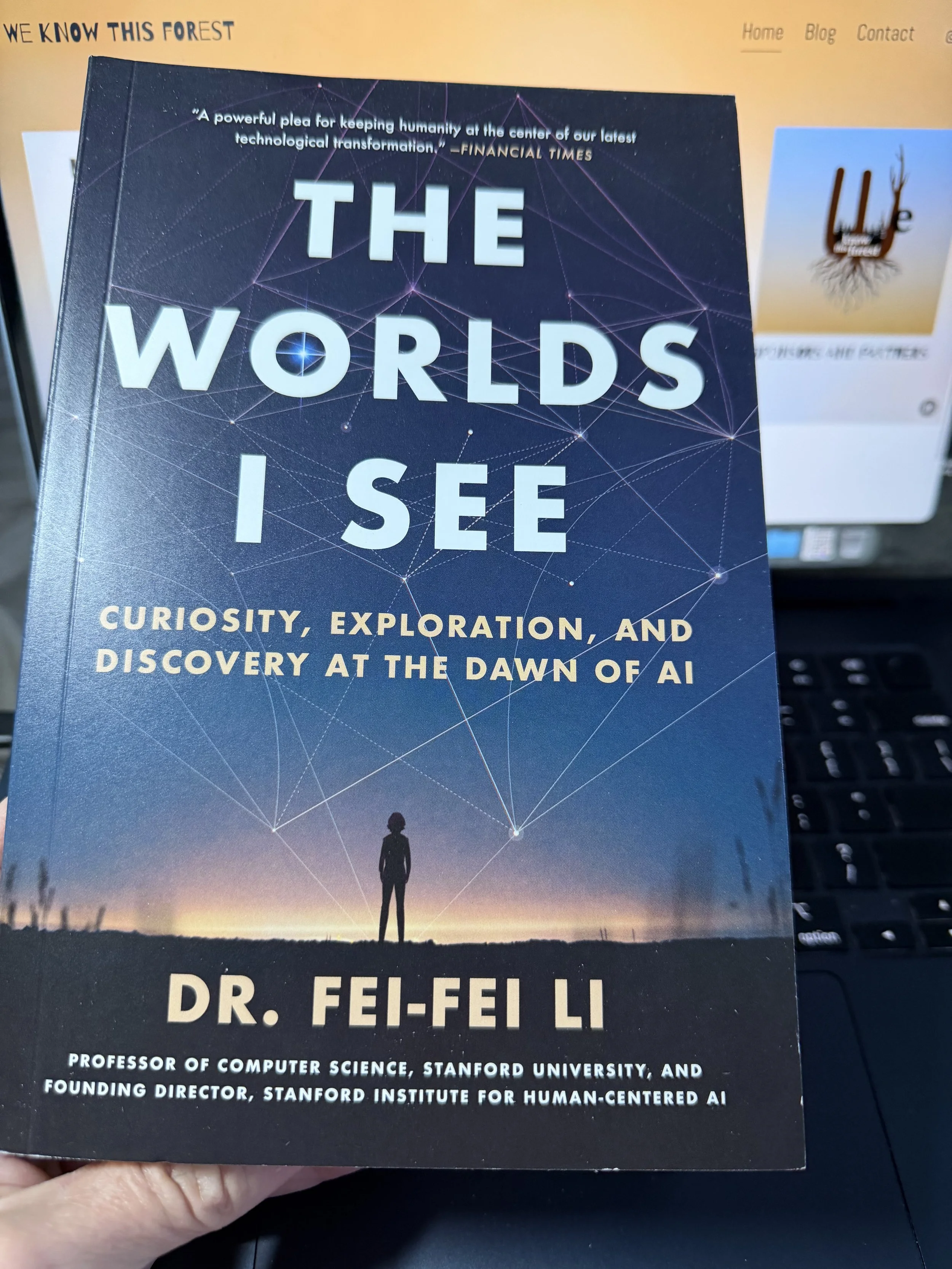
I just finished reading The Worlds I See by Dr. Fei-Fei Li — the Stanford scientist often called the "godmother of AI" for her work building ImageNet, the dataset that helped launch the deep learning revolution. It's a memoir, and I expected it to be about algorithms and breakthroughs. Instead, what struck me most was her search for community, for belonging. She starts her story as an immigrant teenager with little English, working in her family's dry-cleaning store, who then went on to help build the technology now reshaping how we all learn, work, and create.
Her story isn't really about machines. It's about a person looking for a place to belong, and building rigor and curiosity out of that search.
I'm starting here because I think that's exactly what this class, and this moment in your life, is also about. You are entering a world where intelligent machines can generate images, write essays, and offer instant answers to almost anything. That can feel like it shrinks the value of what you create. I want to tell you the opposite is true. The future will not belong to those who know the most facts or produce the fastest output, it will belong to those who can think deeply, create originally, adapt resiliently, and act with integrity. That is exactly what this class is built to develop.
AI is a collaborator, not a substitute for you. Used well, it can generate ideas, simulate possibilities, and give you fast feedback. Used carelessly, it becomes a crutch that quietly erodes your own voice. Your job, in this environment and beyond it, is to stay the author of your own thinking. Ask sharp questions of any tool you use. Evaluate what it gives you instead of accepting it at face value. Keep your originality, your judgment, and your hand in every result you claim as yours.
Critical thinking is no longer optional. It's foundational. Anyone, or anything, can hand you an answer. Few can tell you whether that answer is true, fair, or good. You'll be asked all semester to question sources, notice bias, cross-check assumptions, and defend your own conclusions. That habit of mind will matter in every career you consider, art-related or not.
Creativity is your edge, and it's a practice, not a gift you either have or don't. We build it the way you'd build a muscle: through project-based work on real, messy, open-ended problems; through drafts that fail and get revised; through reflection on why you made a choice, not just what you made. Expect to iterate. Expect some attempts to not work. That's the process, not a detour from it.
Resilience and curiosity will carry you further than talent alone. You will hit frustration, ambiguity, and creative dead ends this semester. What matters is whether you stay curious enough to ask one more question and resilient enough to try again. Effort sustained over time, not a single flash of inspiration, is what produces mastery.
None of this happens in isolation and that's the point. You'll critique each other's work, collaborate on projects, and practice giving and receiving feedback, including comparing your own judgment against AI-generated feedback, to sharpen your discernment. This is where Dr. Li's memoir comes back around for me. No amount of computing power replaced her need for mentors, collaborators, and people who believed in her before she'd proven anything. Skills like communication, teamwork, and professionalism aren't just what employers ask for, they're what a search for belonging actually looks like in practice. This class is a community you're building, not just a room you're sitting in.
So here is my ask of you this semester: bring your curiosity, not just your compliance. Connect what we make here to problems and questions you actually care about. Treat every tool, including AI, as something you direct, not something that directs you. Show up for each other, because that's how belonging gets built. And trust that the deep, human work of noticing, questioning, imagining, and making is not being replaced. It's being asked of you more urgently than ever.
I'm glad you're here. Let's make something real.
Warmly,
Candace Garlock